Eating Patterns
What the Weekly Plate Reveals About Long-Term Weight Patterns
Eleanor Whitfield
·
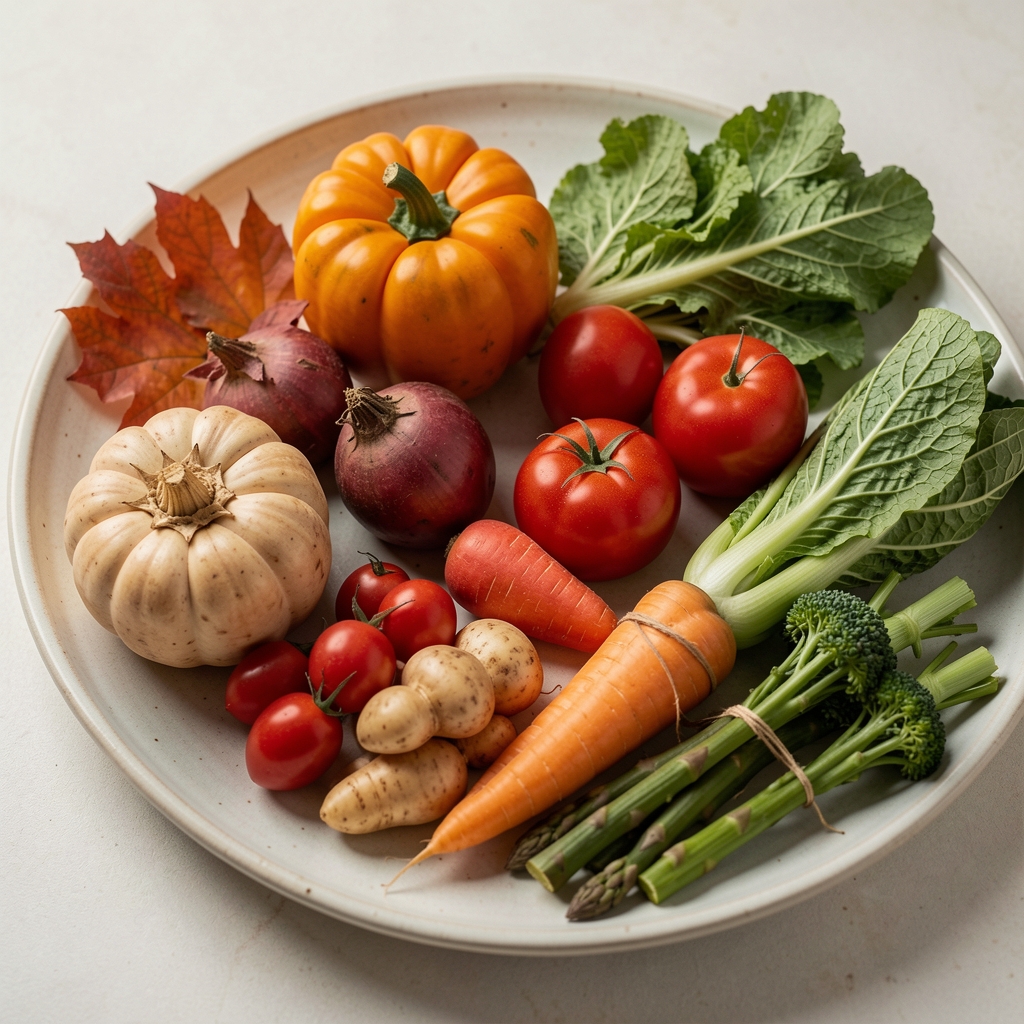
Market produce, early February 2026 — London
There is a considered logic to rotating produce with the seasons — one that extends well beyond the question of freshness into the broader rhythm of nutrient density across a year. The vegetable that arrives at the market in October is not merely a different colour to the one available in July. It carries a different nutritional profile, a different relationship to the soil it grew in, and a different set of practical possibilities in the kitchen.
In nutritional research, dietary variety is consistently identified as a meaningful contributor to overall nutritional balance. The reasoning is not complicated: different foods contain different nutrients, and a diet built on a narrow range of produce — even a nutritionally sound narrow range — will, over time, accumulate gaps. Seasonal eating is, in structural terms, a mechanism for variety. If one's shopping follows what is actually available in the market rather than what is available year-round through industrial supply chains, the plate changes naturally across the year.
This is not a claim about the superiority of any particular seasonal produce over any other. It is an observation about how the practice of seasonal eating tends to function as an automatic rotation — and how that rotation, compounded over months, contributes to a broader nutritional variety than a static shopping list would produce.
In England, the autumn and winter months bring a particular kind of produce that tends to be underrepresented in the typical household diet: root vegetables, brassicas, dark leafy greens, and squash. These carry dense fibre, a range of fat-soluble nutrients, and a satiety quality that is, in practical terms, well-suited to the caloric demands of colder months.
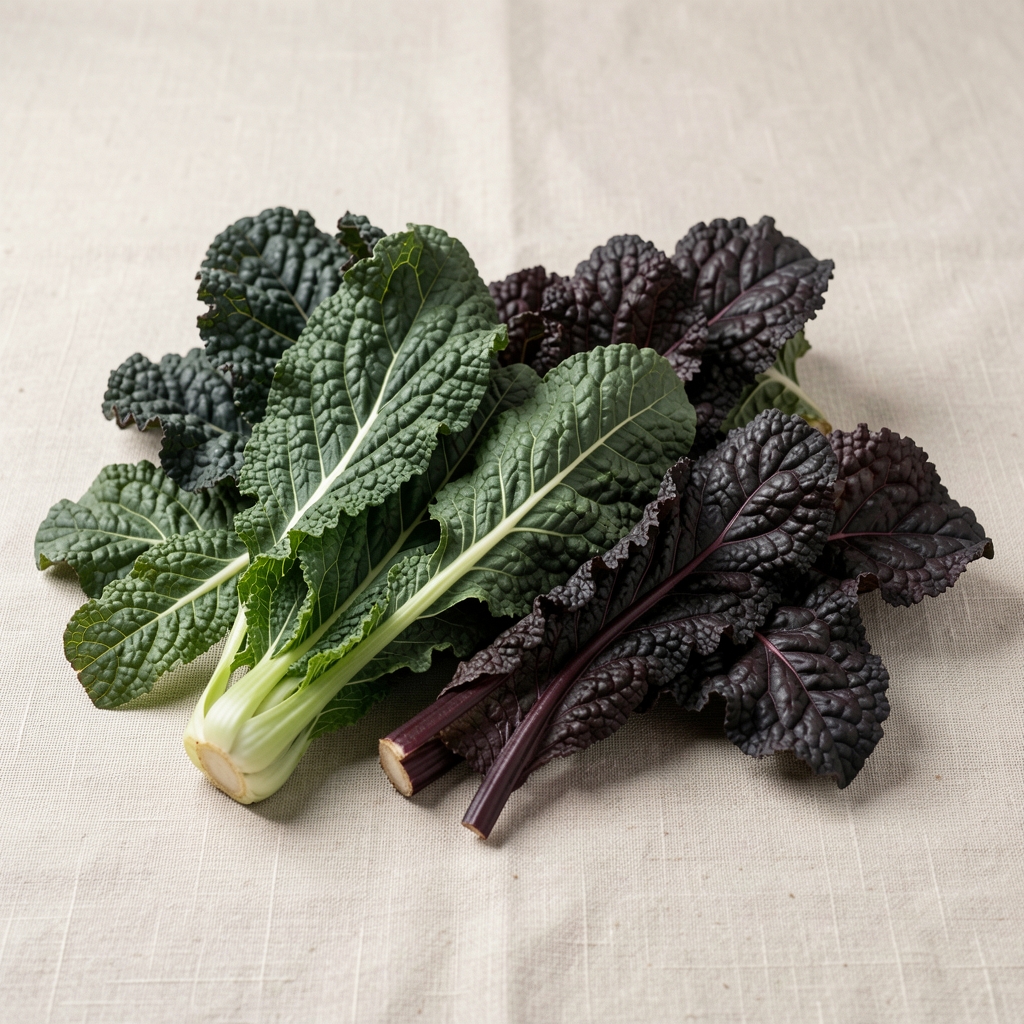
Winter brassicas, market composition — EC1, February 2026
The question of how seasonal eating relates to weight is less straightforward than it is sometimes presented. The direct connection is not seasonal produce itself — it is the broader dietary pattern that tends to accompany a practice of seasonal eating. Those who shop for seasonal produce at markets and cook from raw ingredients tend, as a group, to consume less processed food, prepare more meals at home, and develop a more considered relationship with portion size. The seasonality is, in this sense, a leading indicator of a cluster of food habits rather than an active agent in its own right.
This distinction matters editorially. Articles that credit seasonal vegetables directly with weight reduction are engaging in a form of oversimplification that the available research does not support. What the evidence does suggest is that diets built on varied, whole-food produce — including substantial proportions of seasonal vegetables and fruit — are associated with a more stable long-term weight profile than diets built on a narrow range of processed alternatives.
"The seasonality is a leading indicator of a cluster of food habits — not an agent of change in isolation."
One concrete way in which vegetables — seasonal and otherwise — function in a weight-aware diet is through the contribution of dietary fibre to satiety. Fibre supports a sense of fullness between meals without adding proportionate caloric density. This is a well-established nutritional observation, and it has a practical consequence: a plate that contains a substantial proportion of vegetables tends to produce a more sustained sense of fullness than a plate of equivalent caloric content built from lower-fibre alternatives.
In seasonal terms, the winter months in the UK produce a range of root vegetables — parsnips, celeriac, beetroot, turnip — that carry meaningful fibre content and a dense, satisfying quality in cooked form. These are not exotic or expensive ingredients. They are widely available, often inexpensive, and easily incorporated into the kinds of home-cooked meals that form the practical backbone of a considered eating pattern.
Spring and summer shift the market to lighter produce: asparagus, broad beans, peas, courgettes, and a range of salad leaves. These carry different fibre profiles and different nutrient compositions — and the rotation between these two seasonal registers, sustained over a year, produces the kind of dietary variety that nutritional research identifies as beneficial.
Fruit occupies a contested space in popular nutrition discourse. It carries natural sugars, which some dietary frameworks present as a reason for concern. The broader nutritional picture is more nuanced. Fruit consumed as whole food — rather than in juiced or processed form — delivers its sugars alongside fibre, which moderates the rate at which those sugars enter circulation. The practical consequence is that eating an apple produces a meaningfully different nutritional effect than drinking the same quantity of apple juice.
Seasonal fruit follows a similar logic to seasonal vegetables: summer berries, autumn apples and pears, winter citrus. Each carries a different nutrient profile, and each contributes differently to the overall composition of a week's eating. For those building a weight-aware diet from whole foods, fruit functions primarily as a source of varied nutrition and a contribution to daily fibre intake — not as a source of concern.
For those who find meal planning difficult to sustain, the market visit offers a kind of external structure. The produce available on a given morning sets the practical parameters of the week's cooking. This is not a dietary framework in the strict sense — it is closer to a constraint that turns out to be useful. When the choice is between what is available rather than between the entire range of what is importable year-round, the cognitive burden of grocery shopping is reduced, and the likelihood of purchasing whole produce rather than processed alternatives increases.
Several nutrition writers have observed that the regularity of market visits — weekly, fortnightly, or aligned with market days — functions similarly to other forms of food journalling: not as a record, but as a rhythm. The recurrence imposes a structure on the week's eating that is, over time, more sustainable than either strict planning or complete improvisation.
Seasonal eating and plant-based eating overlap substantially in practical terms, though they are not identical. A seasonal approach may include meat and fish alongside produce; a plant-based approach may include produce sourced from outside current seasonal availability. The two orientations are compatible — and their intersection, in the form of vegetable-centred home cooking built around seasonal availability, represents a reasonable practical expression of the nutritional principles discussed above.
The editorial position at Korit Gazette is not that plant-based eating is inherently superior to other dietary frameworks. It is that the current evidence on dietary variety, fibre intake, and long-term weight patterns consistently points toward a diet in which vegetables and fruit occupy a substantial portion of daily eating — and that a seasonal approach is a practical mechanism for achieving that composition without requiring ongoing caloric calculation or strict adherence to a formal dietary protocol.
That, ultimately, is the quiet arithmetic of seasonal produce: not a dramatic formula, not a rapid-change protocol, but a sustained rotation of varied whole foods that supports nutritional balance across the year and contributes to the kind of long-term weight stability that gradual, consistent food patterns tend to produce.

Tobias writes principally on seasonal produce, plant-based eating, and the practical logic of market cooking. He trained as a chef before completing a diploma in applied nutrition, and his writing reflects both the kitchen and the research literature. He contributes as a guest writer to Korit Gazette.
Read More Articles →